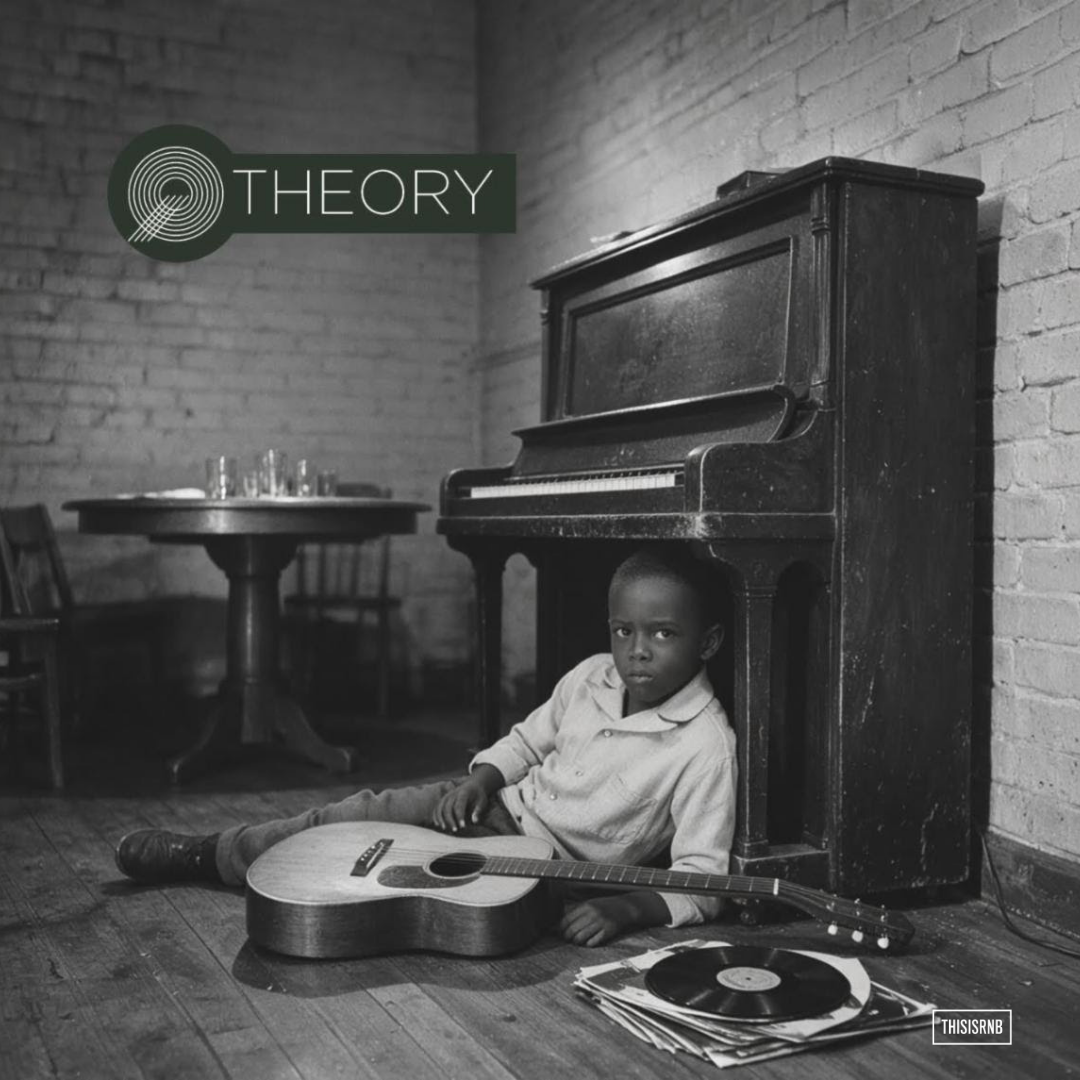
After more than three decades of pushing music beyond its traditional borders, GRAMMY Award-winning artist, producer, composer, and Fugees co-founder Wyclef Jean continues to challenge himself—and his audience—with Q Theory, the latest installment in his ambitious Quantum Leap series.
Released Friday, August 28 via Megaforce and The Orchard, Q Theory follows the first volume of Quantum Leap, Clef Notes, which revisited the hip-hop foundation that helped shape Wyclef’s career. Featuring artists including Lil Wayne, Andra Day, G Herbo, Rapsody, and Theo Croker, Clef Notes served as a reminder that Wyclef has never been confined to one sound, one culture, or one musical lane.
Now, Q Theory takes that spirit somewhere completely different.
The project marks Wyclef’s first strictly jazz album, with approximately 90% of the nine-track collection built around instrumental compositions. At its heart is a tribute to one of his most important mentors, the late Quincy Jones, who famously introduced Wyclef at the Montreux Jazz Festival in Switzerland. The album also introduces Wyclef’s vision of Rara Jazz, blending the improvisational freedom of jazz fusion with the vibrant musical traditions of the Caribbean and the cultural heritage of Hispaniola.
Across the project, Caribbean rhythms meet sounds inspired by Latin America, Africa, and the Middle East, creating a cinematic musical landscape that feels both rooted and expansive. Rather than allowing lyrics to carry the entire story, Wyclef puts the musicianship front and center, letting instrumentation, rhythm, and collaboration speak for themselves.
The lineup reflects that global approach, with contributions from acclaimed musicians and artists including Robert Glasper, Harvey Mason, Yussef Dayes, Theo Croker, Elena Pinderhughes, Niia, Weedie Braimah, Axel Tosca, Godwin Louis, Jean Caze, Mushy Widmaier, and Yiyi Sánchez.
The result is a project that feels less like Wyclef simply making a jazz record and more like an artist continuing to expand the musical language he has been developing throughout his career.
The Bigger ‘Quantum Leap’
Q Theory is part of a much larger creative vision. Wyclef’s Quantum Leap project is planned as seven albums released consecutively over the course of a year, with each volume exploring a different musical world. The journey moves through genres including Hip-Hop, Jazz, Reggae, Gospel, Country, R&B, Haitian Kompa, and other global sounds.
It’s an ambitious concept, but for Wyclef, genre-hopping has always been part of the blueprint.
That approach can be traced back to his landmark work with the Fugees and his globally celebrated solo debut, The Carnival. As the 30th anniversary of The Carnival approaches, its influence remains evident in the way Wyclef continues to bring together sounds and cultures that might not traditionally share the same space. Latin, Caribbean, country, folk, hip-hop, and international influences all found a home within his music long before cross-cultural genre blending became commonplace.
This year also marks 30 years of the Fugees’ seminal album The Score, another milestone underscoring Wyclef’s lasting impact. The anniversary period has also brought renewed moments between Wyclef and fellow Fugees co-founder Ms. Lauryn Hill, with the pair sharing the stage at events including Diaspora Calling!, Global Citizen Festival Rio, the 2026 GRAMMY Awards, and SNL50, with another major appearance at New York City’s Global Citizen Festival on the horizon alongside Lenny Kravitz, John Legend, and more.
Wyclef’s influence continues to surface across today’s music landscape as well. His work has been sampled by artists including Ayra Starr, will.i.am, DJ Mustard, Stormzy, Central Cee, and G Herbo. Herbo’s track “Emergency” notably samples Wyclef’s “911,” bringing one of his earlier solo records into a new generation of hip-hop.
From writing and producing major records for artists such as Shakira, Whitney Houston, Santana, Destiny’s Child, Mary J. Blige, Lil Wayne, and T.I., to building his own catalog across multiple genres, Wyclef has consistently operated where cultures and sounds intersect.
Q Theory continues that tradition while opening another door.
More than simply the next chapter of Quantum Leap, the album represents Wyclef’s belief that music can create a common language across cultures and generations. With Clef Notes looking back toward his hip-hop roots and Q Theory moving into jazz and Rara Jazz, the larger Quantum Leap journey is proving that there are still plenty of musical worlds left for Wyclef Jean to explore.
And after three decades of creating, collaborating, and crossing boundaries, it seems Wyclef isn’t looking backward—he’s still taking the leap.